Featuring a conversation with Charlotte of Charlotte Sy Dimby, a Paris-based children’s clothing brand founded and designed by Monique Ramahay.
There is something about a beautifully smocked dress that feels as though it belongs to another time, yet never seems to go out of style.
Perhaps it’s the delicate embroidery, the softness of the fabric, or the sweet little collars that have graced children’s clothing for generations. Or perhaps it’s the memories these garments hold. The Easter mornings, family gatherings, and childhood portraits that become more precious as the years pass.
As a mother and heirloom photographer, I’ve always been drawn to clothing that celebrates childhood in its most beautiful, traditional form. Pieces that are thoughtfully made, lovingly worn, and perhaps one day tucked away for another generation.
And few brands embody that philosophy quite like Charlotte Sy Dimby.
A Shared Love for Preserving Childhood
I first discovered Charlotte Sy Dimby while searching for beautiful, heirloom-quality children’s clothing. I was immediately drawn to the designs, which combine traditional hand-smocking, delicate details, and the kind of understated French elegance I have always loved.
I’ve raved about their beautiful clothing ever since.
What began as an admiration for the designs has grown into a lovely connection with Charlotte, rooted in our shared appreciation for childhood, craftsmanship, and the things families choose to preserve.
Charlotte even invited me to share my own story on the brand’s journal in a feature titled The Mission of a Memory Keeper.
It was such a meaningful opportunity to share why preserving childhood through portraits and physical artwork is so important to me.
Now, I’m delighted to share a little of Charlotte’s world with you.
I recently had the pleasure of asking Charlotte about the history of smocking, the craftsmanship behind these beautiful garments, and why this tradition continues to hold such a special place in children’s wardrobes.
She was incredibly generous in sharing her knowledge and perspective, and I’m so pleased to share her thoughts with you.
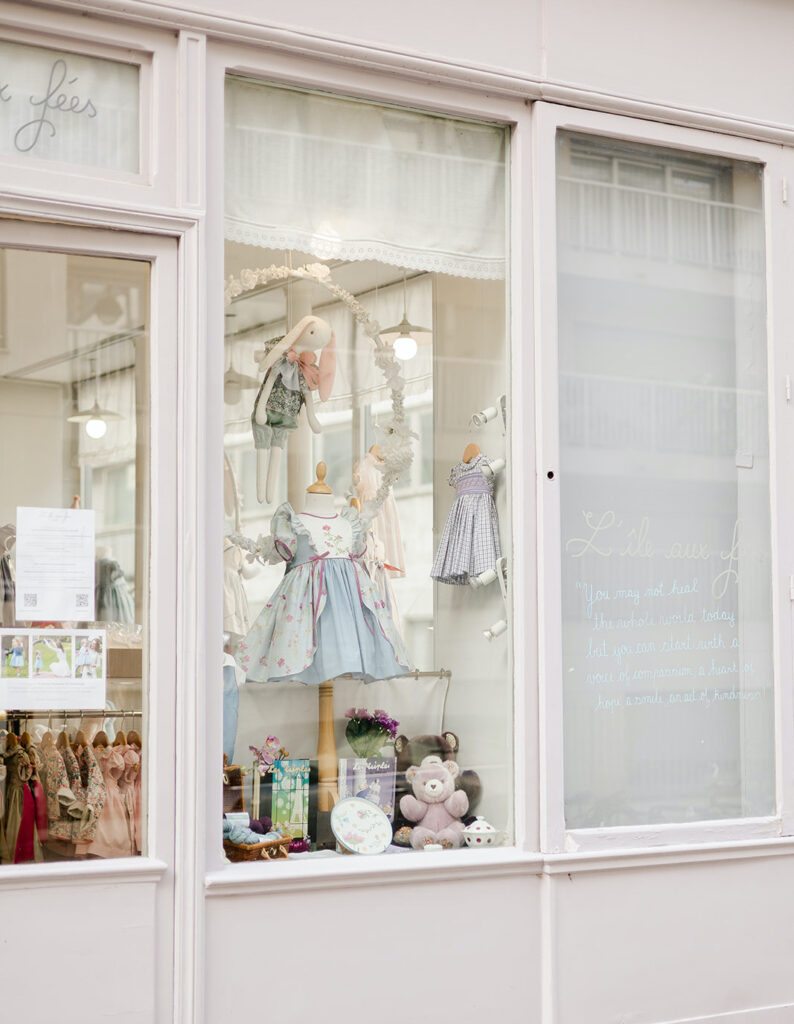
The History of Smocked Children's Clothing
it might surprise you to learn that smocking didn’t begin as a decorative detail on children’s dresses.
As Charlotte explained, its beginnings were far more practical.
Long before elastic became commonplace, English farmers and country workers wore linen smock frocks. The fabric was gathered into tiny pleats and secured with embroidery stitches, allowing the garment to fit comfortably while still providing freedom of movement.
Over time, this practical technique began appearing in more decorative clothing.
Charlotte shared that during the Victorian and Edwardian eras, mothers and grandmothers began incorporating smocking into babies’ and little girls’ dresses. The same technique that had once allowed workers to move comfortably now offered children both beauty and ease.
As she so beautifully put it:
“Smocking found its true home in childhood, where beauty and ease belong together.”
I love that sentiment.
Something that began as a practical way to construct clothing eventually became one of the most recognizable traditions in classic children’s fashion.
And generations later, we’re still drawn to it.
English Tradition Meets French Elegance
When I asked Charlotte about the European influences behind traditional smocked clothing, she described the beautiful relationship between English craftsmanship and French children’s fashion.
Charlotte explained that British traditions helped establish smocking as a beloved part of children’s wardrobes, particularly for christenings, Sunday best, and other special occasions.
She also pointed to the British royal family’s continued appreciation for traditional children’s clothing, which has helped keep these classic styles familiar to families around the world.
French children’s fashion, meanwhile, contributed its own distinctive refinement.
Delicate Peter Pan collars, soft pastel colors, beautiful embroidery, and simple, graceful silhouettes.
At Charlotte Sy Dimby, these two influences come together under the creative direction of Monique Ramahay, the brand’s founder and designer.
Monique’s designs unite the tradition of English smocking with the understated elegance of French children’s fashion, honoring the craftsmanship of generations past while creating clothing that feels just as lovely on children today.
And I think that’s precisely what makes these pieces so special.
They don’t feel like costumes from another era.
They simply feel timeless.
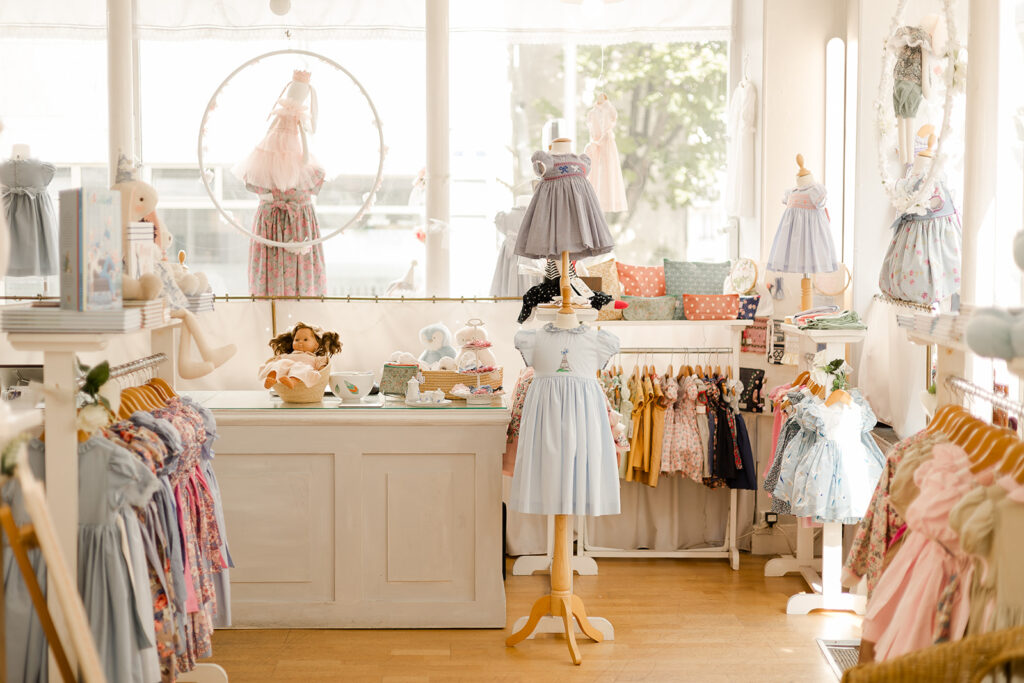
The Beauty of Something Made by Hand
In a world where so much of what we purchase is made quickly and replaced just as quickly, there is something particularly meaningful about clothing created slowly and intentionally.
When I asked Charlotte what distinguishes true hand-smocking from mass-produced alternatives, she explained that the difference is something you can both see and feel.
Traditional hand-smocking is created stitch by stitch over gathered pleats. The careful stitching allows the fabric to retain a gentle elasticity while creating the beautiful texture and softness that make these garments so distinctive.
Machine-made imitations, she explained, can sometimes appear flatter or stiffer, lacking the depth and movement of hand-smocked fabric.
But the craftsmanship doesn’t stop with the embroidery.
Charlotte encourages mothers to look closely at the details, including the ones that might not be immediately visible.
“The secret is to look at both the whole dress, and then the inside too.”
She described beautifully finished hems, fabric-covered buttons, thoughtfully constructed petticoats, and the careful coordination of embroidery, piping, and ribbons.
These are the little things that reveal how much care has gone into creating a garment.
Charlotte also shared some of the special details incorporated into the brand’s designs, including delicate linings, airy skirts, and even two spare buttons known in French as boutons de courtoisie, or courtesy buttons.
I find that little detail especially charming!
There’s something lovely about a designer considering not only how beautiful a dress will look when it’s first worn, but also how it will be cared for and enjoyed over time.
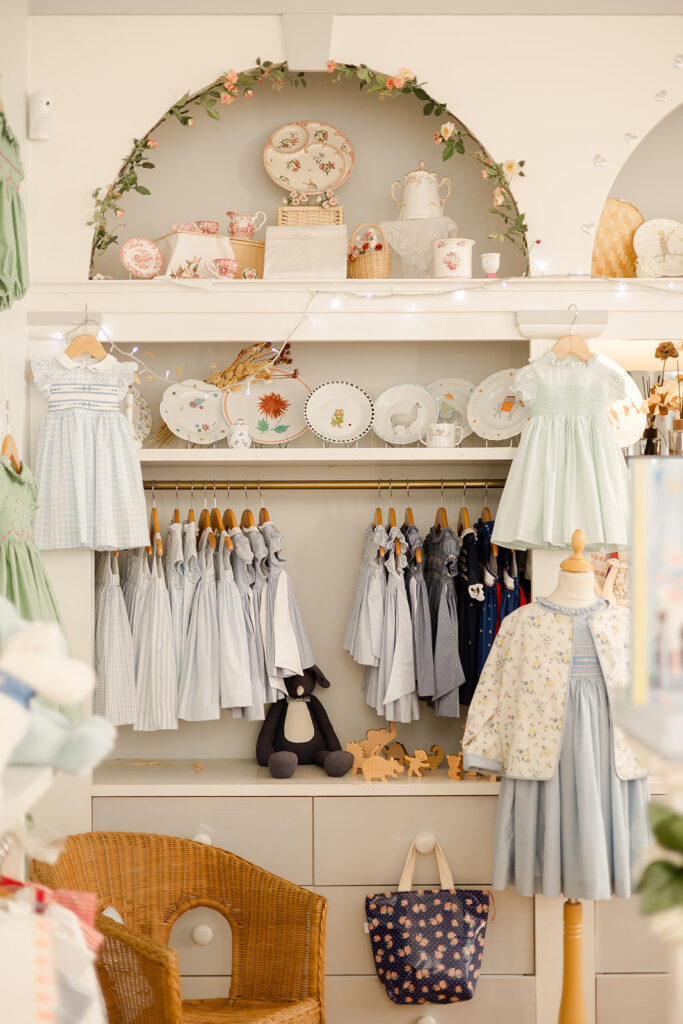
Why Smocked Clothing Never Goes Out of Style
One of my favorite things Charlotte shared was her perspective on why smocked clothing has endured for so many generations.
“Its timelessness lies in the fact that it was never a trend to begin with.”
Isn’t that a lovely way to think about it?
Children’s fashion changes constantly. Colors, silhouettes, and styles come and go.
But a beautifully smocked dress feels just as appropriate today as it might have decades ago.
Charlotte explained that while fashion trends often encourage children to reflect the styles of the moment, traditional smocked clothing allows them to simply look like children.
She spoke about the connection these garments create between generations.
A little girl wearing a smocked dress today might look remarkably similar to her mother or grandmother in childhood photographs.
And perhaps one day, her own daughter will wear something very much like it.
That’s the beauty of tradition.
It doesn’t mean everything must remain exactly the same. Charlotte shared how designers can introduce new fabrics, colors, and thoughtful details while preserving the traditional silhouettes and craftsmanship that make smocked clothing so recognizable.
The tradition continues, but each generation makes its own memories.
When Children's Clothing Becomes an Heirloom
As a photographer, I spend so much time thinking about the things families choose to preserve.
The photographs we frame. The little keepsakes we tuck away. The special pieces of clothing we simply cannot bring ourselves to part with.
And I especially loved asking Charlotte what she believes makes a garment worthy of being passed down.
Her answer centered on three things:
Beauty, quality, and meaning.
Charlotte explained that a garment must be beautifully made, with materials and construction that allow it to last.
Its design should be classic enough that it won’t feel dated years from now.
But perhaps most importantly, it needs a story.
Maybe it was the dress your daughter wore for her first Easter. The outfit your son wore for his first birthday. Or the beautiful little gown you chose for the portraits that now hang in your home.
Those memories become part of the garment.
Charlotte shared some of the lovely stories she hears from families who purchase the brand’s designs.
Mothers write to tell her about dresses being saved for younger siblings, future daughters, and even grandchildren not yet born.
Some expectant parents visit the Paris boutique while on their babymoon, searching for their baby’s first special dress with the hope that it will become a treasured family keepsake.
Charlotte described hearing these stories as one of the most beautiful rewards of creating clothing that becomes part of a family’s history.
I find that incredibly touching.
Because while children may only fit into these little garments for a short time, the memories connected to them can last a lifetime.
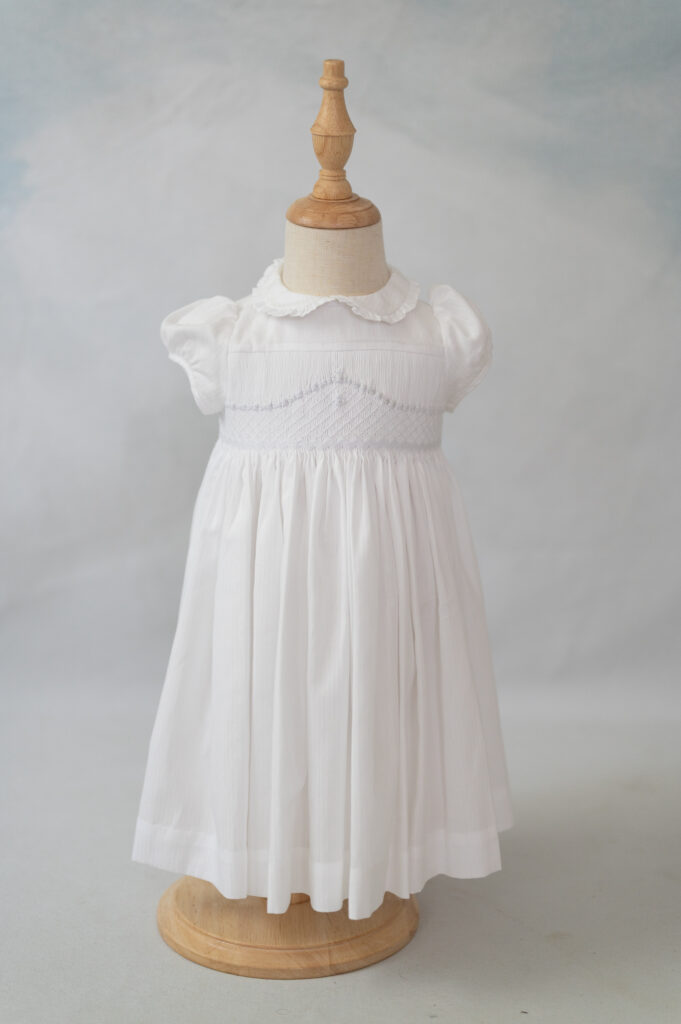
Why Smocked Clothing Is So Beautiful for Heirloom Portraits
Of course, I couldn’t talk with Charlotte about smocked clothing without asking why she thinks it photographs so beautifully.
Her answer captured something I have always appreciated about these garments.
“Smocking brings texture, depth, and character to an image.”
Charlotte explained how the delicate pleats catch the light, the embroidery adds beautiful detail, and the soft folds of a skirt create a graceful silhouette around the child.
She particularly loves white and ivory heirloom dresses, along with soft pinks, blues, and other gentle colors. Traditional details such as Peter Pan collars, puffed sleeves, delicate embroidery, and hand-smocked bodices are among her favorites for portraits.
I couldn’t agree more.
For my own heirloom portraits, I often gravitate toward white and ivory garments with delicate smocking, soft collars, and traditional silhouettes.
I love the way these pieces complement the simplicity of my white backdrop and allow a child’s face and expression to remain the focus.
But I also love what they represent.
There is something particularly meaningful about photographing a child in clothing that was made with the same care and intention that goes into creating their portrait.
Both are meant to be treasured beyond the moment.
And when a family chooses to preserve that portrait as framed artwork, the garment becomes part of a memory that can be enjoyed long after it has been outgrown.

Choosing Children's Clothing Worth Keeping
For mothers hoping to build a small collection of special childhood garments, Charlotte shared advice that I wholeheartedly agree with.
Begin with fewer, better pieces.
She recommends choosing natural fabrics, classic colors, and gentle silhouettes that won’t feel tied to a particular season.
Look closely at the quality of the embroidery, the construction, and the finishing details.
Consider whether the garment is something that could be worn and loved by another child one day.
And care for it thoughtfully so that it has the opportunity to become part of your family’s story.
But Charlotte also offered one final piece of advice that I especially loved:
“And above all follow your heart! Love is the very best of guides.”
I think that applies to so many of the things we choose to preserve for our children.
Sometimes we simply know when something is special.
Preserving the Things That Matter
One of the reasons I’ve grown so fond of Charlotte Sy Dimby’s work is that I recognize a shared philosophy in what we create.
The brand’s beautiful dresses are designed to be worn, loved, and passed down.
My heirloom portraits are created with the hope that they’ll become part of a family’s history, displayed in their homes and eventually treasured by generations who haven’t even been born yet.
Both begin with an appreciation for childhood and the understanding that these little years are fleeting.
I often think about a mother carefully packing away her daughter’s first smocked dress, knowing she’ll never be quite that little again.
And then I think about the portrait hanging on the wall, preserving exactly how she looked when she wore it.
The dress holds the memories.
The portrait allows us to see them.
And together, they become two beautiful ways of remembering a childhood that passed far too quickly.
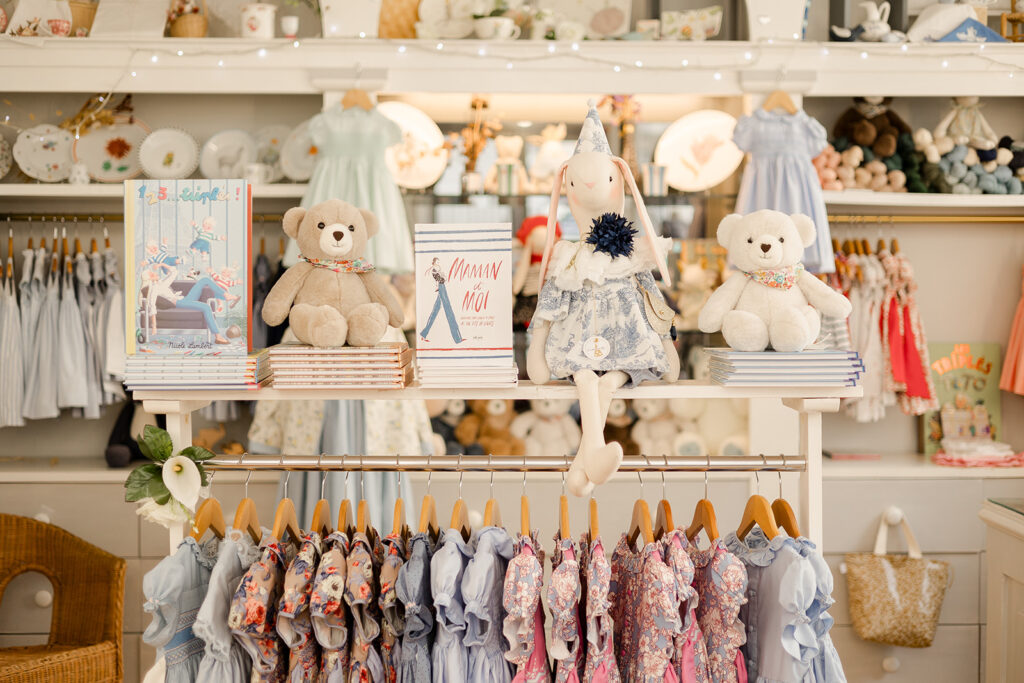
Discover Charlotte Sy Dimby
If you’ve fallen in love with the designs as much as I have, I encourage you to explore the beautiful collection of handmade smocked children’s clothing at Charlotte Sy Dimby.
You can also read the lovely feature Charlotte shared about my photography journey, The Mission of a Memory Keeper.
And if you’re considering heirloom portraits for your own little one, I’d be delighted to help you select something beautiful from my carefully curated studio wardrobe.


